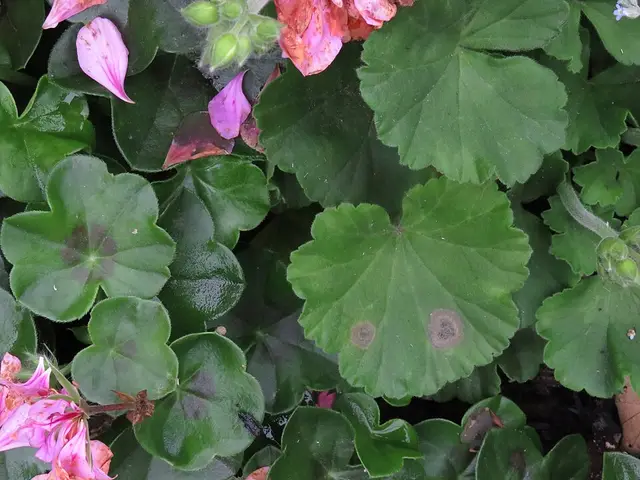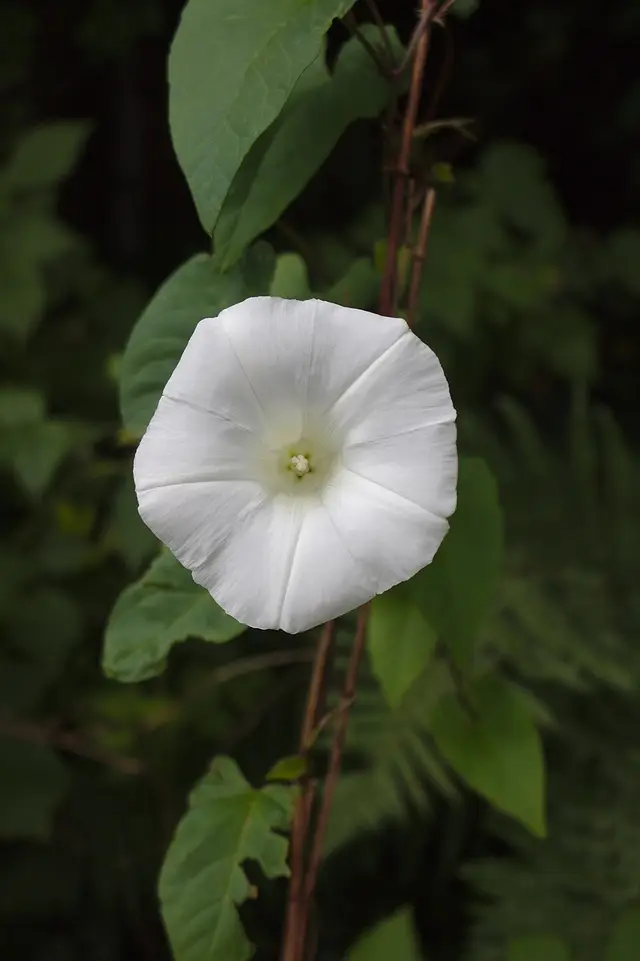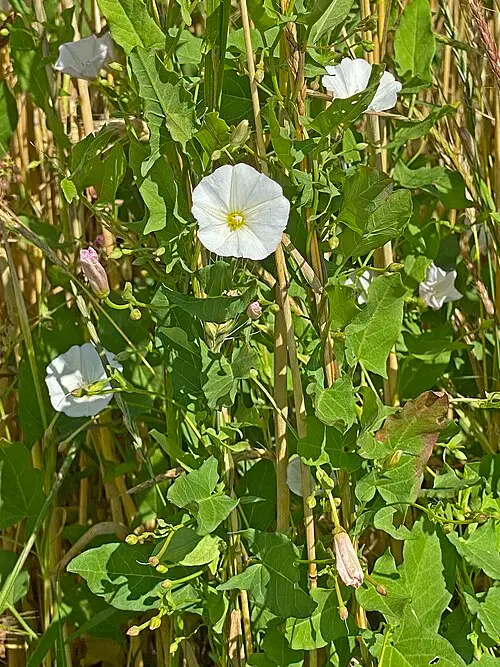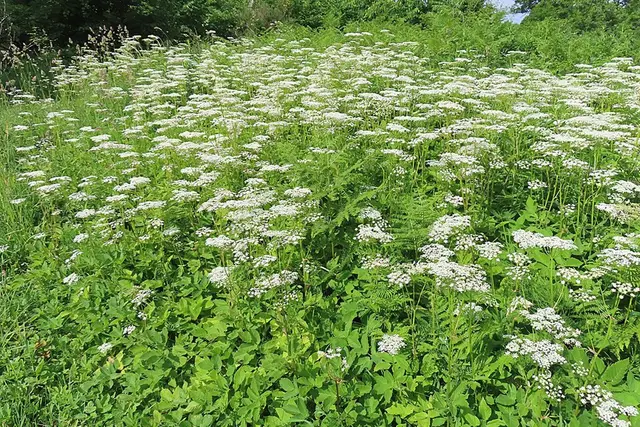
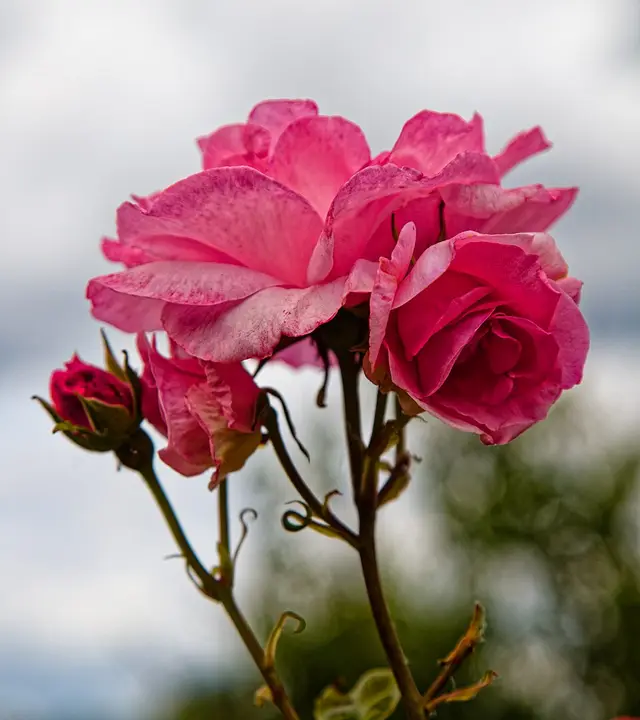
Acabashi, CC BY-SA 4.0, Wikimedia Commons
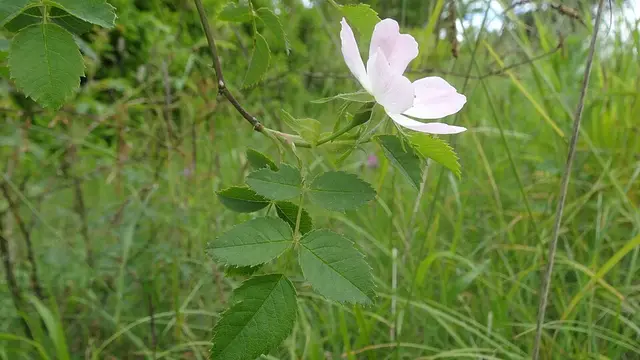
Pauline GUILLAUMEAU, CC BY-SA 2.0 fr, Wikimedia Commons
Name
Rose, Rosa spp.: bush roses (hybrid tea, floribunda), shrub roses, climbers, ramblers, patio and ground-cover roses.
- The most frequent ornamental plant in a survey of 267 UK gardens: in 179 of them (Loram et al. 2008, BUGS project PDF).
- Old-fashioned shrub roses do well on clay (RHS clay soils).
Identify it
Key features
- Stems: woody, usually with prickles ("thorns"). A few kinds are nearly thornless.
- Leaves: each leaf is split into several oval, toothed leaflets, usually 5 or 7, in pairs with one at the tip. There's a small leafy flap where the leaf stalk meets the stem.
- Flowers:
- wild types have 5 petals
- garden kinds are often fully double
- many are scented
- Fruit: hips, red or orange, in autumn.
- Size: from about 30 cm (patio roses) to 10 m or more (ramblers up trees).
In mid-September
- Repeat-flowering kinds still have some flowers and buds.
- Once-flowering roses and species roses show hips instead.
- Leaves are often tired: black spots, yellowing and early leaf drop are normal now (see Problems).
Look-alikes
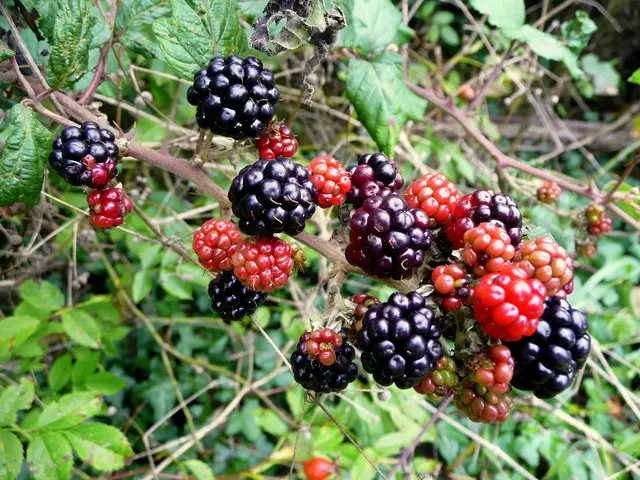
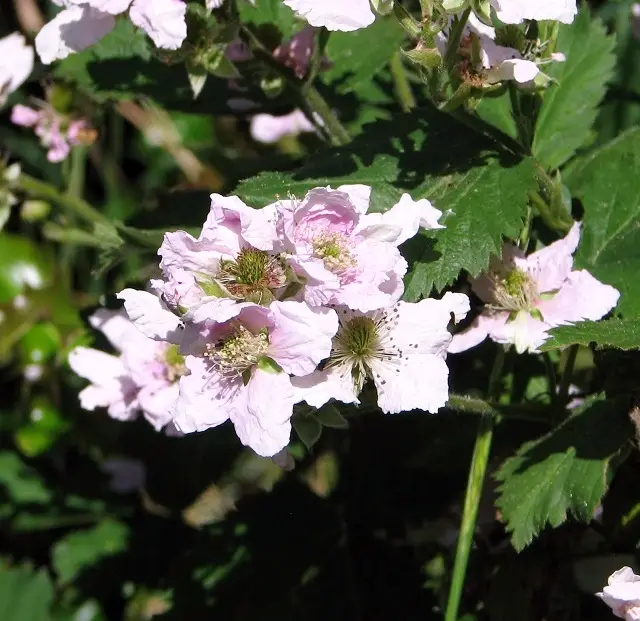
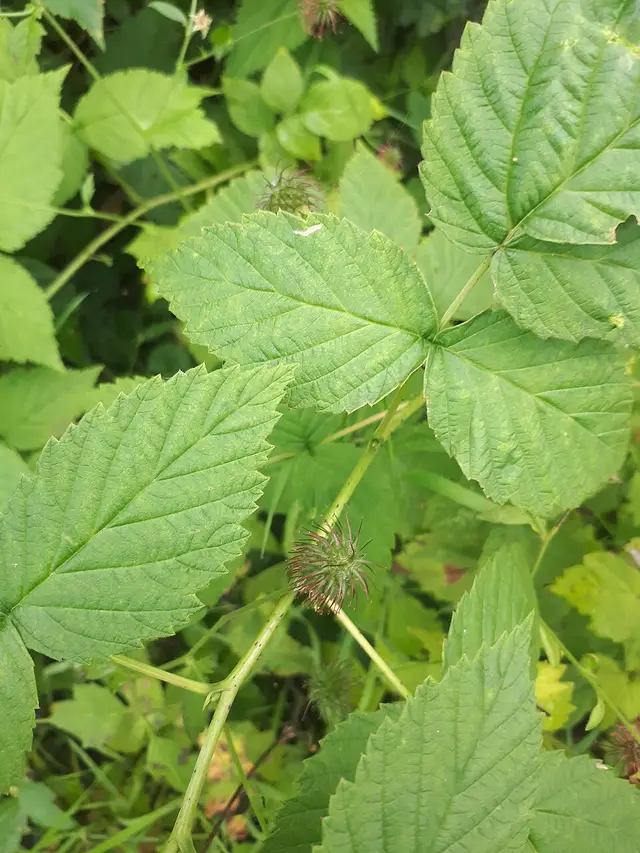
- Bramble (blackberry):
- also prickly with split leaves, but the leaflets spread like a hand from one point, not in pairs (3 to 7 of them; the count varies)
- long arching stems that root where the tips touch soil
- blackberries, not hips
- Dog rose (wild rose):
- arching hedge rose with single pale pink or white flowers and red hips
- a shoot like this coming up from below a garden rose is often a sucker from the rootstock (see Pruning)
- Japanese rose, Rosa rugosa:
- stems thick with bristly prickles, and deeply veined, wrinkled leaves
- big single magenta or white flowers, then fat tomato-like hips
- on Schedule 9: it's an offence to plant it or let it grow in the wild (Schedule 9; gov.uk invasive plant rules). Never dump its cuttings or hips over the fence into open land.
Do this month (mid-Sep to Oct)
- Keep deadheading repeat-flowering roses. Cut to just above the next bud (RHS deadheading).
- Leave the hips. Don't deadhead species and rambler roses that carry decorative, bird-friendly hips (RHS deadheading).
- Clear black spot leaves.
- Rake up fallen leaves with black spot and send them to council green waste (RHS October).
- Or bury them under a layer of mulch (RHS black spot).
- Climbers and ramblers can be pruned in October (RHS October).
- Against wind-rock: from October, cut roses back by half so winter winds don't rock the roots loose (RHS October; RHS November).
- Suckers: remove any you find (see Pruning).
Pruning
When
- Late winter, February or March, suits most roses (RHS rose pruning).
- Timing and severity depend on the type. Each has its own RHS guide:
- hybrid tea and floribunda
- shrub
- climbing
- rambling
- patio and miniature
- ground cover
- Don't know the type? The RHS says watch how it regrows. Vigorous, flowering regrowth suggests a hybrid tea or floribunda; less vigorous growth suggests a shrub rose (RHS rose pruning).
How (all from RHS rose pruning)
- Cuts: no more than 5 mm above a bud, sloping down away from it so water runs off. Keep secateurs sharp so cuts are clean.
- Bud direction: usually cut to an outward-facing bud to open the centre. On sprawling kinds, use inward-facing buds.
- Take out first: dead, diseased, spindly and crossing stems. Cut dieback back to healthy white pith.
- Aim for well-spaced stems with air flowing between them.
- On established roses: cut out poorly flowering old wood, and saw away old stubs that haven't made new shoots.
- Suckers: trace them back to the root they grow from and pull them away.
Classic mistakes
- Hard-cutting a climber or rambler that has a single stem. It may not regenerate (RHS rose pruning).
- Cutting suckers off at ground level instead of pulling them. The RHS method is to pull them from the root.
- Deadheading hip roses into autumn. You remove the hips the birds use (RHS deadheading).
- Pruning every rose the same way. Check the type first.
Deadheading, feeding and watering
- Deadheading:
- Pinch or snap off faded flowers with the stalk, or use secateurs on tough stems, cutting to just above the next bud (RHS deadheading).
- On roses with decorative hips, stop in mid-summer so the hips can form (same source).
- Feeding: general-purpose or rose fertiliser in spring, then mulch (RHS rose pruning; RHS April). No feeding now.
- Watering: Gap. Not sourced yet.
Winter care
- Cut roses back by half in October or November against wind-rock (RHS October; RHS November).
- Clear black spot leaves, so the disease has less to restart from next year (RHS October).
- Do the main prune in February or March (RHS rose pruning).
Problems
Black spot (RHS black spot)
- Looks like:
- from spring, fast-spreading purple-black patches on the upper leaf surface
- the leaf often yellows around the spots and drops
- sometimes small black scabby marks on young stems
- Worst on: hybrid teas, floribundas, climbers and patio roses. Older species roses are little affected.
- Fix without chemicals:
- collect and destroy fallen leaves in autumn, or bury them under mulch
- prune out stem lesions in spring before the leaves appear
- Chemicals: the RHS recommends against fungicides, which can reduce biodiversity and harm soil health. we do not spray (see the law).
- Disposal: council green waste, not home compost (RHS October).
Rose rust (RHS rose rust, as described on the black spot page)
- Orange or black spore pustules on leaf undersides.
- Orange pustules on distorted stems.
Rose powdery mildew (RHS rose powdery mildew)
- White powdery growth that can be very disfiguring.
- The RHS October page says leaves with mildews and rusts are safe to compost, unlike black spot (RHS October).
Other problems
- Dieback: cut back to healthy white pith (RHS rose pruning).
- Suckers: see Pruning.
- Aphids and other insects: Gap. Not sourced yet.
Safety
- Pets:
- The ASPCA lists rose as non-toxic to dogs and cats (ASPCA rose; read from a search summary, page not opened).
- Rose isn't on Dogs Trust's list of poisonous garden plants (Dogs Trust).
- Skin: the prickles are the hazard. Wear thorn-proof gauntlet gloves and long sleeves, and use eye protection when working inside a climber.
- Gloves: always.
PRO TIPS
1. Ask before you deadhead in autumn. "Do you like the hips on this one?" Species and rambler roses are left for hips and birds (RHS deadheading).
2. Tell the homeowner black spot is managed, not cured.
- The routine is clearing leaves every autumn and pruning out marked stems in spring.
- The RHS advises against fungicides, and we don't spray (RHS black spot).
- If they're replacing a rose, older species types suffer least.
3. Book two visits into the diary. An October or November half-cut against wind-rock, then the February or March main prune (RHS October; RHS rose pruning).
4. Spot suckers from the ground. A shoot rising from the soil a little away from the bush, with different-looking leaves, is probably a sucker. Pull it off at the root (RHS rose pruning).
5. A Rosa rugosa hedge by open land: keep its trimmings and hips in the green-waste bag (Schedule 9; gov.uk).
<a id="lavender"></a>